Search This Blog

Sunday, November 9, 2025

A Place Called Hope

Today:  Gabi, Harrison, Sophie, Aaron

Wednesday...

WHAT DO YOU WANT TO DISCUSS IN OUR REMAINING CLASSES?

Keep reviewing Johnson, ch.10 (lightened reading load is on purpose)

Student hour today: 1:20-2:30.

Addendum to last week:  Reagan and the ozone hole; Bush and acid rain.

The wages of lip-reading:

New Democrats:

Deficits and the Economy

Deficit Reduction Act of 1993 (Johnson 330-331)

The booming 1990s.

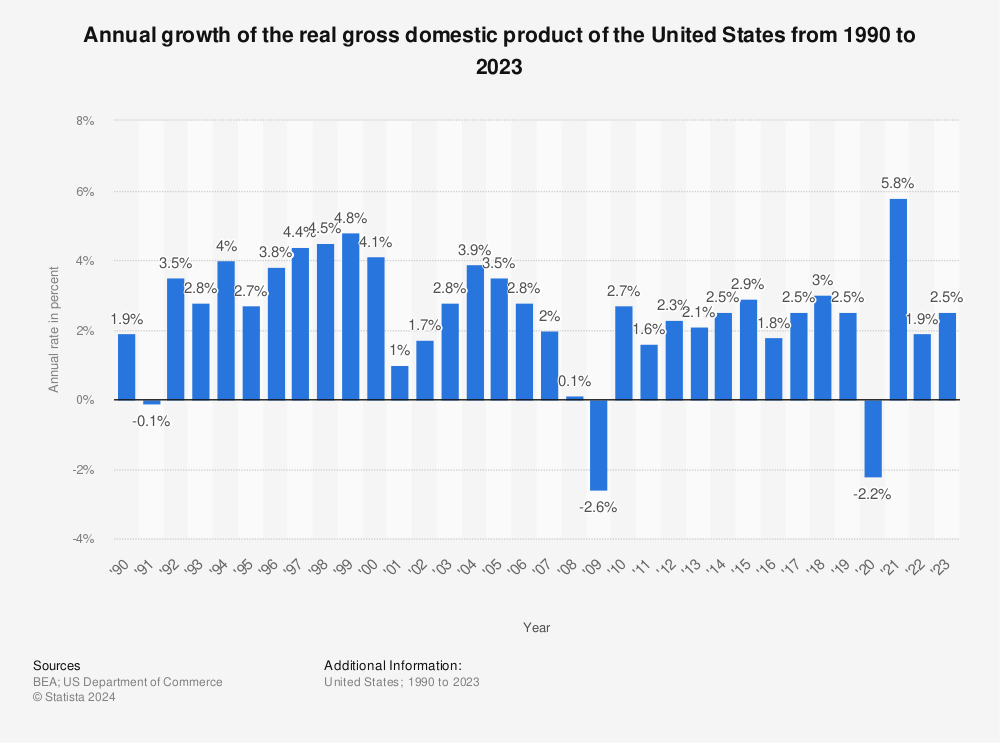
Real GDP grows steadily:

Statistic: Annual growth of the real gross domestic product of the United States from 1990 to 2024 | Statista
Find more statistics at Statista

Unemployment drops steadily:


And we have a surplus!


Underlying conditions:
  • The Cold War ends on Christmas Day 1991, when the USSR officially dissolves.
  • The Internet (but what happens to the Dot.com revolution?)
  • NAFTA and Globalization
    • Most support in both chambers came from Republicans.
    • Gore defends it in CNN debate with Ross Perot.

Early setback on health care

Secretive process, complex proposal. Opponents used this chart:


Harry and Louise:

Did not make it to the floor of either chamber

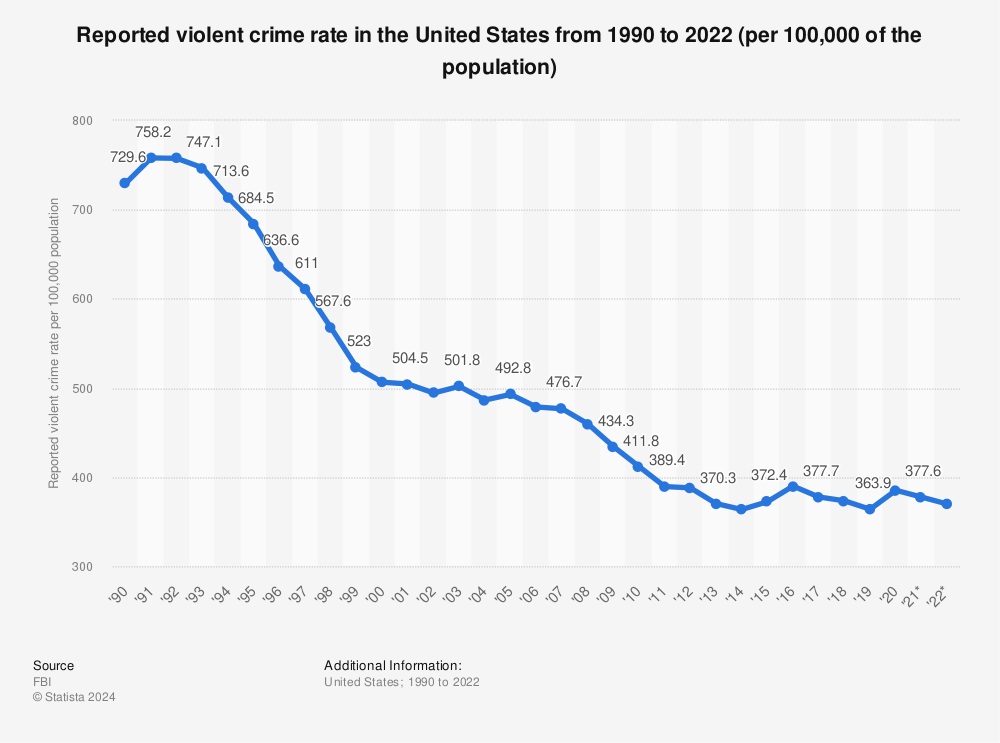
Crime


Statistic: Reported violent crime rate in the United States from 1990 to 2023 (per 100,000 of the population) | Statista
Find more statistics at Statista

The 1994 Crime Bill (Johnson 331)
  • Federal Assault Weapons Ban: Prohibited the manufacture, transfer, and possession of certain semi-automatic assault weapons.
  • Increased federal death penalty: Expanded the number of crimes eligible for the federal death penalty.
  • New federal crimes: Created new federal offenses, including those related to hate crimes, sexual assault, and gang activity.
  • Funding for police: Provided funding for 100,000 new police officers across the country.
  • Gun restrictions: Expanded the list of people banned from owning firearms, such as those with domestic violence convictions.
  • Sex offender registries: Required states to establish registries for sexual offenders by September 1997.
  • Increased penalties: Implemented "three-strikes" provisions for repeat offenders and increased penalties for many crimes.
BUT MOST OF THE ANTICRIME ACTION WAS AT THE STATE LEVEL.


For next time, the political upheaval of 1994.


Tuesday, November 4, 2025

"Read My Lips"

For Monday: Johnson, ch. 10

Presentations today: Davis, Jim, Peilin, Scott.  

We need volunteers for Monday.

No student hour today: have to leave right after class. Can Zoom tomorrow 9-noon if you need me.

Fiscal policy, continued

Saving Social Security for about 50 years (Johnson 302-303)

  • Accelerated Payroll Tax Increases and New Coverage 
  • Taxation of Benefits for Higher Earners 
  • Gradual Increase in Full Retirement Age 
Tax Reform (Johnson 304-305)

Grace Commision, DOGE without teeth

Gramm-Rudman-Holling(Johnson 302-303)

"Read My Lips"


  • Employer sanctions
  • Strengthened Border Patrol
  • AMNESTY
Disability Legislation
  • IDEA adds autism as reporting category


Americans with Disabilities Act (Johnson 307-309)

Sunday, November 2, 2025

Enter the Gipper

For Wednesday: Johnson ch. 9

Next week, student hours:  today and tomorrow 1-2, and by appointment.

Oral presentations:  today will be Jacques, Stephanie, and Miles. N
eed 3-4 volunteers for Wednesday.  

Stylistic points:
How the Iran Crisis Changed US Politics
  • The 1978-79 Iranian Revolution deposes the Shah, disrupts global oil supply and triggers a recession.
  • In 1979, Iranian students take US embassy workers hostage. The crisis lasts 444 days. An attempt at rescue ends in humiliating failure.
  • Reagan wins, GOP takes the Senate for the first time since 1952 and makes major gains in the House.  
A policy window opens -- but for what?

"In private, Stockman agreed that his former congressional mentor, John Anderson, running as an independent candidate for President in 1980, had asked the right question: How is it possible to raise defense spending, cut income taxes, and balance the budget, all at the same time?"

Why raise defense spending?  

Public opinion had shifted:


USSR

Concern about deficit


Reagan inaugural:
In this present crisis, government is not the solution to our problem; government is the problem.

Minutes later, a less-remembered line

Now, so there will be no misunderstanding, it's not my intention to do away with government. It is rather to make it work -- work with us, not over us; to stand by our side, not ride on our back. Government can and must provide opportunity, not smother it; foster productivity, not stifle it.

Shift in GOP Economic Policy

Republicans had not always been tax cutters.  In the second 1960 debate, Nixon said: 
I think it may be necessary that we have more taxes. I hope not. I hope we can economize elsewhere so that we don’t have to. But I would have no hesitation to ask the American people to pay the taxes even in l961 – if necessary – to maintain a sound economy and also to maintain a sound dollar

The inflation of the 1970s created "bracket creep."

Jack Kemp and the Kemp-Roth tax bill: 30% across-the-board cut in income taxes.  Takes off after the overwhelming victory of California's Prop 13 shows the appeal of tax cuts.

The Laffer Curve:


March 18, 1981, Reagan survives an assassination attempt and his approval rating jumps 8 points.


Significance of the Reconciliation process?

OBRA: purported to cut federal spending by an estimated $130.6 billion over three years by cutting funding for many social programs.

But ... Baseline budgeting:
There was less there than met the eye. Nobody has figured it out yet. Let’s say that you and I walked outside and I waved a wand and said, I’ve just lowered the temperature from 110 to 78. Would you believe me? What this was was a cut from an artificial CBO base. That’s why it looked so big. But it wasn’t. It was a significant and helpful cut from what you might call the moving track of the budget of the government, but the numbers are just out of this world. The government never would have been up at those levels in the CBO base.”
Tax cut

Why did Democrats not filibuster?  They did not have the votes.

Provisions
  • Across-the-board 23% cut in individual income tax rates over three years. It also reduced the top marginal tax rate for individuals from 70% to 50% and lowered corporate and capital gains taxes.
  • Accelerated depreciation: The act introduced the Accelerated Cost Recovery System (ACRS), which allowed businesses to write off the costs of their assets over a shorter period. This was intended to stimulate business investment and economic growth.
1982
  • Contractionary monetary policy triggers a deep recession, topping at 10.8 percent, still the highest since the Great Depression. 
  • Scroll up to see the deficit graph again.
Reagan agrees to tax hikes:
  • The Tax Equity and Fiscal Responsibility Act of 1982 had several key provisions, including an increase in the federal unemployment tax wage base and tax rate.
  • The Highway Revenue Act of 1982 raised the gasoline excise tax from 4 cents to 9 cents through the fall of 1988.
  • The Social Security Amendments of 1983 sped up increases in the payroll tax rate and provided for the taxation of some Social Security benefits.
  • The Deficit Reduction Act of 1984 reduced tax benefits from income averaging and extended telephone excise tax through 1987.
  • The Consolidated Omnibus Budget Reconciliation Act of 1985 permanently raised the cigarette excise tax to 16 cents per pack.
  • Omnibus Budget Reconciliation Act of 1987 extended the telephone excise tax through 1990 and eliminated the estate tax deduction loophole for employee stock ownership plans. 
Tuesday, October 28, 2025

Days of Future Past

For Monday:
For Wednesday, Johnson ch. 9.

Will post Johnson appendices -- good study material for the final.

Next week, student hours: Mon and Tue 1-2, and by appointment.

Oral presentations:  need three volunteers for Monday.  

That 70s Show:  Current relevance of laws that passed under Ford and Carter
  • Ethics in Government Act of 1978: This act established mandatory, public financial disclosure for high-level officials across all three government branches.
  • Presidential Records Act of 1978: A reaction to Nixon's attempt to control his White House papers, this law established that presidential and vice-presidential records are the property of the U.S. government. Presidents must turn over all official records to the National Archives at the end of their term.  Trump did not.
  • National Emergencies Act of 1976: After discovering that numerous old emergencies, Congress created a formal process for declaring and ending national emergencies. A declared emergency automatically ends after a year unless the president extends it.
    • Proclamation 10886 – National Emergency at the Southern Border (Jan. 20, 2025)
    • Executive Order 14156 – National Energy Emergency (Jan. 20, 2025)
    • Executive Order 14157 – Designating Cartels as Foreign Terrorist Organizations (Jan. 20, 2025)
    • Executive Order 14193 – Illicit Drug Emergency at the Northern Border (Feb. 1, 2025)
    • Three Executive Orders – Tariff Emergencies on Mexico, Canada, and China (Feb. 2025)
    • Executive Order 14144 – Cybersecurity Innovation Emergency (Jan. 16, 2025)
    • Executive Order 14203 – Sanctions on the International Criminal Court (Feb. 6, 2025)
    • Executive Order 14257 – Reciprocal Tariff Emergency (Apr. 2, 2025)
    • Executive Order 14323 – Emergency Sanctions Against Brazil (Jul. 30, 2025)
  • Foreign Intelligence Surveillance Act (FISA) of 1978: Reaction to revelations of illegal domestic spying, FISA created a special court to oversee and authorize surveillance activities against foreign powers and their agents in the U.S. It also established congressional oversight committees for intelligence activities.
And of course...Education
  • Califano-- an LBJ guy in the Carter administration
  • Was education doing well in the 1970s?
  • Why did Carter propose a separate Education Department?
    • (Hint)
    • Why did Califano oppose it?
  • What did he think was the "greatest danger"? (p. 279)
The special case of special ed.
About 1.8 million students with physical and mental disabilities were either completely excluded from the public school system, placed in institutions, or held in separate, inadequate classrooms.  A young Yale Law graduate investigates (start at 3:20)

    Legal precedents:


    1975 Education for All Handicapped Children Act (in 1990 becomes IDEA).
     As a condition of federal aid, schools must abide by these conditions:
    • Free and Appropriate Public Education (FAPE): Schools cannot exclude students based on  disability.
    • Individualized Education Program (IEP): Schools must evaluate a child's special needs and develop an individualized education program.
    • Parental involvement: Mandates the involvement of a child's parents in the the IEP.
    • Least Restrictive Environment (LRE): Requires that children with disabilities be educated alongside their non-disabled peers to the maximum extent appropriate.
       Signing the bill, Ford offered prescient words of caution:
Unfortunately, this bill promises more than the Federal Government can deliver, and its good intentions could be thwarted by the many unwise provisions it contains. Everyone can agree with the objective stated in the title of this bill--educating all handicapped children in our Nation. The key question is whether the bill will really accomplish that objective.

Even the strongest supporters of this measure know as well as I that they are falsely raising the expectations of the groups affected by claiming authorization levels which are excessive and unrealistic.

        As Ford predicted, appropriations have never come close to the         authorized level. 

    Project 2025: 

"Most IDEA funding should be converted into a no-strings formula block grant targeted at students with disabilities and distributed  directly to local education agencies by Health and Human Service’s Administration for Community Living."

        Recent Layoffs and OSEP and OCR could have the same effect.


Sunday, October 26, 2025

Watergate, Anti-Nixon Backlash, and Ford

  • For next time, Califano excerpts on Canvas. (Posting this afternoon)
  • Oral presentations
  • A look back at the Erie Canal: technology, literal path dependency, federalism
The policy decisions of 1973 reflected a very different partisan landscape from today.  Those acts are very much in play.

January 22, 1973: Roe v. Wade (Johnson 272-273)


The Watergate Window
The result was a break from the late 20th-century pattern, with the impetus coming less from the president than from Congress in reaction to the president.


The House overrode the veto with a vote of 284 to 135. 
Vote to override: 198 Democrats and 86 Republicans.
Vote to sustain the veto: 32 Democrats and 103 Republicans.

Senate roll call vote
The Senate's vote was 75 to 18,
Vote to override: 50 Democrats and 25 Republicans.
Vote to sustain the veto: 3 Democrats and 15 Republicans.


Political finance and transparency
  • Federal Election Campaign Act (FECA) Amendments of 1974 (Johnson 270-271) -- which Ford signed -- created the Federal Election Commission (FEC) to enforce campaign finance law, instituted public financing for presidential elections, and placed limits on campaign contributions and spending, though SCOTUS struck down spending limits.
  • Freedom of Information Act (FOIA) Amendments of 1974: Overriding Ford's veto, Congress strengthened the 1967 FOIA by rolling back the executive branch's power to withhold documents and establishing specific time limits for government agencies to respond to requests. The amendments also gave courts the power to review classified documents to ensure they were properly designated.

Congressional Budget and Impoundment Control Act of 1974: 

  • There was no budget until 1921 -- but it was an executive process, not a legislative one.
  • What led Congress to pass a new law?  The unintended consequences of previous decisions.
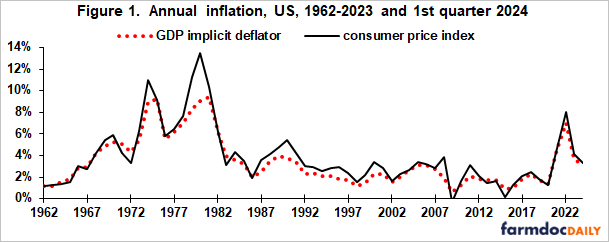
      • Stagflation limits fiscal choices (Lee).  Nixon's wage-price controls (Johnson 258) helped trigger inflation. Nixon himself admitted error: "What did America reap from its brief fling with economic controls?  The August 15, 1971 decision to impose them was politically necessary and immensely popular in the short run.  But in the long run I believe that it was wrong.  The piper must always be paid, and there was an unquestionably high price for tampering with the orthodox economic mechanisms."
    • Deficits grow
    • Entitlement spending grows
    • Nixon impounds funds.
Provisions of the 1974 Budget Act (SEE AN EXHAUSTIVE 2022 SENATE REPORT)

  • Restricted the president's power to withhold or "impound" funds already appropriated by Congress by establishing procedures for the president to request congressional rescissions of appropriated funds.  Current issue
  • Created permanent House and Senate Budget Committees to oversee the budget process and draft the annual budget resolution.
  • Established the Congressional Budget Office to provide Congress with nonpartisan analysis, cost estimates, and budget projections to aid in decision-making.
  • Created a process for Congress to adopt a concurrent resolution on the budget. This non-binding resolution sets overall levels for spending and revenue, which are then allocated to committees.
  • Established a legislative process -- Reconciliation -- to allow Congress to make changes to spending and revenue laws to align them with the budget resolution targets.
  • Changed the federal government's fiscal year from July 1 to October 1.

Tuesday, October 21, 2025

Nixon: Welfare, School Desegregation, Health

Research tips

For next time:


Unanticipated consequences 

In 1935, members of Congress designed ADC as a modest, temporary way of keeping mothers -- mostly widows -- at home.  It remained a modest program through the 1950s. In 1962, the program -- now Aid to Families with Dependent Children -- became a way to rehabilitate the poor to join the workforce (Gillon, p. 60)

During the 1960s:
  • CAPs and legal services programs helped the poor understand their rights (Gillon 68);
  • Welfare rights activism took off;
  • Court cases expanded rights for AFDC recipients;
  • Anyone receiving cash assistance through AFDC was automatically enrolled in Medicaid, providing free health insurance for low-income parents and their children.


    • Guaranteed minimum income: The plan would have provided a federal minimum income floor for families with children, which was an innovative step toward a negative income tax.
    • Expansion to the "working poor": Unlike AFDC, which primarily served unemployed families, the FAP was to provide benefits to the "working poor"—families with low-wage earners.
    • Work requirements and incentives: The FAP included a work requirement for able-bodied recipients, but also financial incentives to work. Families could keep the first portion of their earnings without a reduction in benefits, with benefits decreasing gradually as income rose.
    • National standardization: The FAP aimed to create a single, national standard for family assistance, addressing the wide variation in benefit levels across states under the AFDC system.

Despite passage in the House, the plan fails because of opposition from both sides. Conservatives see it as too expensive -- Nixon acknowledges that it would "cost more" at first -- while many liberals deem guaranteed income level to be too low. 


Moynihan gets into political hot water:  The 1965 Moynihan Report and  The "benign neglect" memo (1970, p. 7)


On the one hand, Nixon tries to appeal to white Southerners with rhetoric and efforts to appoint Souther justices.  On the other...

"You will be better advised to watch what we do instead of what we say"  -- John N. Mitchell 


Health Insurance

An unanticipated consequence of Medicare is that it fuels medical price inflation. 

Nixon proposes Obamacare 1.0.  Both involve employer-provided insurance -- path dependency.


Gary L. Freed, Anup Das, "Nixon or Obama: Who Is the Real Radical Liberal on Health Care?" Pediatrics 136 (August 2015)

Nixon National Health Strategy 19714ACA 20103,6
National Health Insurance PartnershipEmployer-Shared Responsibility
(1) Require employers to provide basic health insurance coverage for their employees, with the minimum requirement being to pay for hospital services, inpatient and outpatient physician services, full maternity care, well-infant care, immunizations, laboratory services, certain other medical expenses, and minimum of $50 000 in catastrophic coverage(1) Employers with at least 50 full-time employees must offer health coverage that is affordable and provides a minimum level of benefits to at least 95% of their employees and dependents. None of their employees can receive a premium tax credit to help pay for coverage on a marketplace; if so, the employer must make a shared responsibility payment
(2) The costs for this would be shared by employers and employees, with a 35% ceiling on employee contribution for the first 2.5 years, and 25% after that(2) Affordable coverage is defined as ≤9.5% of an employee’s annual household income
(3) Keep the range within which benefits can vary narrower than it has been, so competition between insurance companies will be more likely to compete on overall price of contracts(3) A plan provides the minimum level of coverage if it covers at least 60% of the total allowed cost of benefits
(4) Small employers are exempt from the coverage requirement and allow them to purchase insurance through the small business health options program
(4) Require the establishment of special insurance pools in each state that would offer insurance at reasonable group rates to people who did not qualify for other programs: the self-employed or poor-risk individuals
(5) Small employers with up to 25 employees and average annual wages less than $50 000 are eligible to receive a tax credit
MedicaidMedicaid Expansion
(1) Implement the Family Health Insurance Plan to meet the needs of poor families by eliminating the part of Medicaid that covers most welfare families. In its place, develop a new insurance plan that is fully financed and administered by the federal government. This federal health insurance plan would provide insurance to all poor families with children headed by self-employed or unemployed persons whose income is below a certain level. As family income increases, the cost-sharing would increase through a graduated schedule of premium charges, deductibles, and coinsurance payments(1) Provide funding to states to expand their Medicaid programs to cover non–Medicare-eligible individuals younger than 65 with incomes up to 133% of the federal poverty line
(2) Guarantee all newly eligible individuals a benchmark insurance package that includes the minimum benefits for plans in the marketplace
(3) Finance the coverage for the newly eligible with federal dollars until 2016, and then gradually decrease the federal contribution to 90% by 2020
(4) Increase Medicaid payments in fee for service and managed care for primary care services to 100% of Medicare payment rates
Nixon Comprehensive Health Insurance Plan 19745
Employee Health Insurance
(1) Require all employers to offer all full-time employees health insurance, with employee contribution at 35% for 3 years, and then 25% subsequently
(2) Use federal subsidies to ease initial burden on employers
(3) Specific deductible, coinsurance, and out-of-pocket limits under this insurance plan
Assisted Health Insurance
(1) Replace state-run Medicaid by implementing a federally administered insurance plan to cover anyone not offered coverage under the Employee Health Insurance or Medicare
(2) Individuals could also get this if they cannot get coverage at reasonable rates from other options


Monday, October 20, 2025

Research Paper

Explain how any one of the federal policies that we discuss in the course affected one individual.  This paper should not simply tell one person's story. Instead, it should use that story as a case study of a larger phenomenon.  Was that person's experience typical or exceptional?  Did the policy have a different impact on people from different demographic backgrounds?  On balance, did the policy have the effect that its authors intended?

In addition to interviewing your subject, you must delve into primary sources (e.g., the laws, rules, or executive orders defining the policy) as well as scholarly and official analyses of the policy.

You may write on a different topic, but clear it with me in advance.

In the weeks ahead, you will make a very brief (5-minute) oral presentation on your paper.

Requirements

  • Length: No more than six double-spaced pages (I will not read past page 6).
  • Format: Word document only (no PDFs, no Google Docs).
  • Citations: Chicago/Turabian style endnotes (not footnotes). Be precise: page numbers, dates, or document IDs. Endnotes do not count against the page limit.
  • Style: Clear, polished writing counts. Grammar, spelling, diction, and punctuation all matter. Review Strunk & White and my writing lecture before you draft.
  • AI:  It is appropriate to use AI to identify relevant articles, documents, and other sources. But misrepresenting AI-generated content as your own work is plagiarism.
  • Deadline: Friday, November 21, 11:59 PM on Canvas.  If Canvas gives you trouble, email me your Word file. I reserve the right to dock papers one grade point for one day's lateness, a full letter grade after that.

The End

Final exam is Wednesday, in this classroom,  9-noon.   Back to the Future COVID (Johnson 437-439) as a case study Issue-Attention Cycle:   1...